
Mental Health & The Menstrual Cycle: Connecting FAM + Mental Wellness
Often overlooked but vital, the menstrual cycle speaks volumes about your health. In recent years,

The experience commonly labeled as infertility is far more than a medical classification. It is a psychological, emotional, and existential experience that unfolds over time. For some, the word infertility feels accurate, clarifying, even validating. For others, it feels heavy, premature, pathologizing, or deeply misaligned with their lived reality.
In my work as an integrative fertility counselor, one of the earliest and most important steps is often slowing down around language. How someone names their experience matters. Words shape meaning, identity, and nervous system responses. For many individuals and couples, part of the emotional work is not only coping with fertility challenges, but also reclaiming language that reflects their body, values, and sense of self.
This article explores the psychological impact of infertility, while also honoring the fact that not everyone experiencing difficulty conceiving experiences themselves as “infertile.” We will examine how fertility challenges affect mental health, identity, relationships, and emotional well-being, and how nuanced, person-centered support can foster resilience and healing.

Research consistently demonstrates a strong association between fertility challenges and increased psychological distress, including anxiety, depressive symptoms, chronic stress, and reduced quality of life. Yet these outcomes are not solely the result of reproductive difficulty itself.
They are often shaped by:
For some, receiving an infertility diagnosis brings relief through explanation. For others, it introduces a sense of finality or defectiveness that does not match their internal experience, particularly for those with unexplained infertility, cycle irregularities, or fluctuating fertility markers.
This discrepancy between diagnosis and lived experience can itself become a source of psychological distress.
Women navigating fertility challenges often experience layered emotional responses that extend beyond treatment cycles or test results. While increased anxiety, depressive symptoms, and stress are well-documented, many women also describe deeper identity shifts.
Common experiences include:
For some women, the label infertility resonates. For others, it feels inaccurate, especially when cycles are present, ovulation occurs, or pregnancy has happened before. Being told one is “infertile” while still experiencing cyclical fertility awareness can create internal dissonance and erode bodily trust.
Emotional support must go beyond symptom management. In my practice, we often work with:
Support groups, fertility coaching, therapy, and integrative care models can help women feel less alone while honoring their individuality within the fertility journey.

Men’s psychological experiences with fertility challenges are frequently underrepresented, yet deeply impactful. Many men report distress that is less visible but no less profound.
Common themes include:
When fertility challenges are framed narrowly or primarily through a female lens, men may struggle to locate themselves emotionally within the process.
Men benefit from spaces where:
Encouraging men to engage in counseling, peer support, fertility health practices, or embodied stress-regulation practices can significantly improve emotional well-being and relationship health.

Fertility challenges do not affect individuals in isolation. They impact the relationship as a whole. Even in strong, secure partnerships, the pressure to conceive can introduce sustained emotional stress that reshapes communication, intimacy, and shared decision-making.
Couples often find themselves navigating differing emotional responses, coping styles, and levels of engagement. One partner may feel deeply immersed in research, tracking, and treatment decisions, while the other feels overwhelmed, avoidant, or emotionally fatigued. This mismatch can create tension, resentment, or the sense that one partner is “carrying” the experience more than the other.
Importantly, these differences do not reflect a lack of care or commitment. They reflect different nervous system responses to uncertainty, grief, and loss of control.
The cumulative stress of fertility treatments (appointments, procedures, medications, waiting periods, and outcomes) can erode emotional bandwidth over time. Many couples report increased conflict, emotional withdrawal, or difficulty accessing empathy during prolonged fertility challenges.
Sexual intimacy may also shift. What was once spontaneous or connective can begin to feel goal-oriented, pressured, or emotionally charged. For some couples, sex becomes scheduled and medicalized; for others, it becomes avoided altogether as a way to protect against disappointment or grief.
Without intentional support, fertility challenges can narrow the relationship’s identity, where conversations, decisions, and emotional energy become dominated by fertility alone.
Fertility care often introduces significant financial strain, which can compound emotional stress within the relationship. Decisions around how much to invest, when to pause, or when to stop treatment can surface differences in values, risk tolerance, and long-term vision.
Open, ongoing conversations about finances, limits, and expectations are essential. Creating shared agreements, rather than reactive decisions made in moments of urgency, can help couples maintain a sense of teamwork and agency.
Research consistently shows that couples navigating fertility challenges experience higher levels of anxiety, depression, relationship distress, and reduced quality of life compared to couples not facing infertility. Studies have also documented increased sexual dysfunction and communication breakdowns during prolonged fertility stress.
At the same time, evidence suggests that couples who seek support, through counseling or facilitated support spaces, often report:
Couples counseling with a fertility-informed facilitator can offer a structured space to:
Fertility challenges can feel profoundly isolating within a relationship but they do not have to be endured in silence or separation. With open communication, relational support, and compassionate coping strategies, many couples find ways to navigate this journey with greater resilience and mutual understanding.
As couples move through the emotional impact of fertility challenges, seeking support is often not a sign of relational weakness, but of care for the relationship itself. In the next section, we will explore the importance of emotional support during fertility challenges and the different forms that support can take.

Emotional support is not ancillary to fertility care. It is foundational. Nervous system support improves coping, decision-making, relational resilience, and overall quality of life.
Support may include:
As an integrative fertility counselor trained in fertility awareness education and functional hormone health, my work centers the whole person, not just reproductive outcomes.
This includes helping clients:
Despite increasing public conversations about fertility challenges, stigma remains deeply embedded, both socially and clinically.
Many individuals navigating difficulties with conception report being met with well-intentioned but minimizing responses such as “just relax,” “stay positive,” “it will happen when it’s meant to,” or “don’t think about it so much.”
While often offered as reassurance, these messages can invalidate the emotional reality of the experience and subtly communicate that distress is excessive, inconvenient, or self-created.
Stigma thrives in silence.
When fertility-related grief, fear, anger, or ambivalence are minimized or dismissed, individuals often learn to suppress their emotional responses in order to remain socially acceptable or “easy to support.” Over time, this emotional suppression can contribute to increased anxiety, shame, isolation, and delayed help-seeking.
For many, stigma is not only external. It becomes internalized. Individuals may question the legitimacy of their distress, blame themselves for “not coping better,” or feel guilty for needing support when there is no visible loss or clear endpoint.
This is particularly common in experiences of unexplained fertility challenges or early-stage conception difficulty, where suffering is real but poorly recognized.
Language plays a powerful role here.
The ways fertility challenges are named, framed, and discussed by family, clinicians, and society can either reinforce shame or create space for compassion and understanding. Narrow or pathologizing narratives can flatten complex experiences, while nuanced language allows individuals to remain in relationship with themselves rather than at odds with their emotional responses.
Countering stigma requires more than awareness. It requires active relational and cultural shifts, including:
Seeking emotional support in the midst of fertility challenges is not an admission of weakness or failure. It is an act of self-respect, self-preservation, and psychological resilience.
When stigma is named and challenged, individuals are more able to access the support they need and to move through this experience with greater integrity and care.

For some, prolonged fertility-related stress evolves into clinically significant anxiety or depression.
This does not mean someone is “not coping well.” It means their nervous system has been under sustained strain.
Symptoms may include:
Evidence-based treatment, including psychotherapy and, when appropriate, medication, can be deeply supportive.
Integrative fertility counseling offers a trauma-informed, body-aware approach that recognizes how emotional, hormonal, and nervous system factors interact and can be a wonderful complement to mental health support where more intensive medicalized treatment is needed.
By recognizing the signs of infertility-related depression and anxiety and seeking appropriate support, individuals can improve their emotional well-being and overall quality of life. In the following section, we will summarize the key points discussed and encourage those struggling with infertility to seek support and resources.
Fertility challenges are not just something to “get through.” They shape how individuals relate to their bodies, their partners, and their sense of future.
Honoring the psychological impact of this experience requires nuance, compassion, and a willingness to move beyond rigid labels. With supportive, integrative care, individuals and couples can navigate fertility challenges in ways that preserve dignity, agency, and emotional well-being, regardless of outcome.
You are allowed to define your experience in language that feels true to you. And you do not have to do this alone.
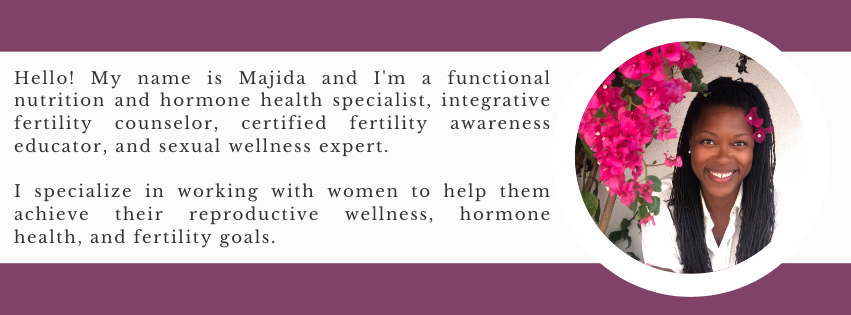
If you’re looking for a holistic, personalized approach to your fertility journey, I’m here to help. I’m Majida, and at Connection Care Therapy, I offer integrative fertility counseling that combines my formal training with specialized expertise to support your whole self.
With a Master’s in Mental Health Counseling with a focus in Fertility Counseling, Reproductive Trauma, and Integrative Approaches to Reproductive Health, plus certifications as a fertility awareness educator and functional nutrition & hormone health specialist, I bring comprehensive, evidence-based support to your fertility journey.
My integrative approach includes:
Whether you’re trying to conceive naturally, undergoing assisted reproductive technology, optimizing your hormone health, or processing challenges and loss, I can create a tailored program to meet your needs.
You don’t have to navigate this journey alone. Let’s work together to support your fertility, your health, and your wellbeing.
Ready to take the next step?
Contact Connection Care Therapy today to schedule a consultation and begin your path toward greater understanding, agency, and hope.
Disclaimer:
The information provided on this blog is for educational and informational purposes only and is not intended as a substitute for professional medical advice, diagnosis, or treatment. Always seek the advice of your physician or other qualified health provider with any questions you may have regarding a medical condition. The content on this blog is not meant to replace professional medical advice or to be used to prevent, diagnose, or treat any disease or illness. Reliance on any information provided by this blog is solely at your own risk.
Often overlooked but vital, the menstrual cycle speaks volumes about your health. In recent years,

In today’s world, more women are seeking natural and safe methods to enhance their understanding

Exploring the connection between fertility awareness and birth control can seem overwhelming given the myriad
You’ve probably heard of environmental toxins. Whether it’s concerns raised over what is sprayed on

Do you notice shifts in energy levels, moods, and cravings throughout your menstrual cycle? Many

If you’re looking to enhance your reproductive health or gain a better understanding of fertility