
Mental Health & The Menstrual Cycle: Connecting FAM + Mental Wellness
Often overlooked but vital, the menstrual cycle speaks volumes about your health. In recent years,

Progesterone is a steroid hormone best known for its role in the menstrual cycle and pregnancy, but its influence extends far beyond reproduction alone. It plays a central role in cycle regulation, endometrial health, nervous system balance, and the coordination of other hormones such as estrogen and cortisol.
In a healthy menstrual cycle, progesterone works in dynamic relationship with estrogen to support ovulation, prepare the uterine lining for potential implantation, and signal the transition into menstruation when pregnancy does not occur. When progesterone production is inadequate, or when its effects are impaired, individuals may experience symptoms ranging from cycle irregularities and premenstrual distress to challenges with conception or early pregnancy support.
This article offers an in-depth, clinically grounded exploration of progesterone, its role in hormone health and fertility, and how imbalances may arise. We will also explore how fertility awareness charting and functional nutrition can provide meaningful insight into progesterone function, often before abnormalities appear on standard lab work.
Whether you are a clinician, educator, or someone seeking deeper understanding of your own cycle, this guide is designed to support informed, empowered decision-making around hormone health.
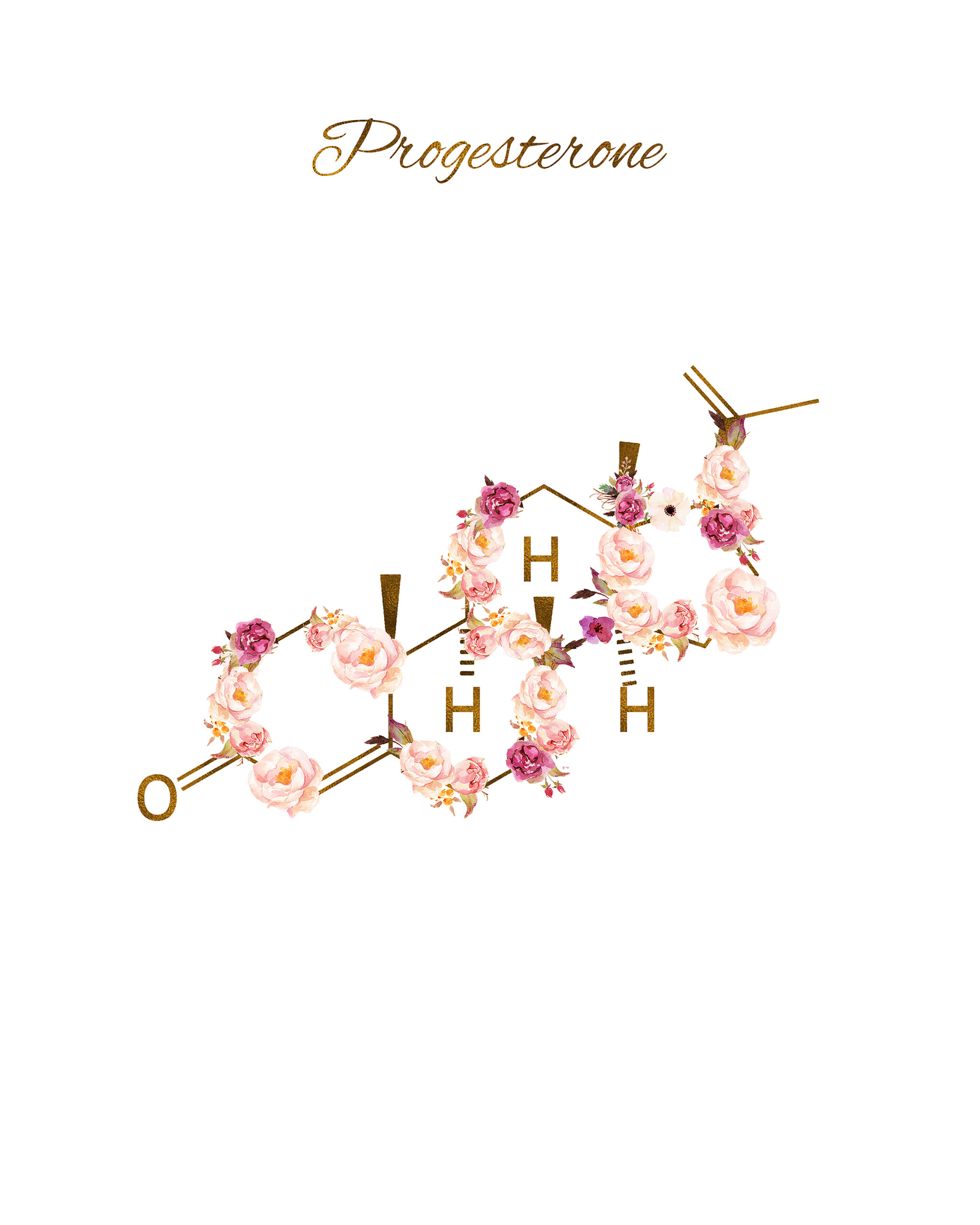
Progesterone is a naturally occurring steroid hormone produced primarily by the corpus luteum in the ovary after ovulation. Smaller amounts are also produced by the adrenal glands, and during pregnancy, by the placenta.
After ovulation, the follicle that released the egg transforms into the corpus luteum, which secretes progesterone. This rise in progesterone:
If pregnancy does not occur, progesterone levels fall, triggering menstruation. If pregnancy does occur, progesterone production continues, initially from the corpus luteum and later from the placenta, to support early gestation.
Adequate progesterone production depends on successful ovulation, sufficient luteal phase length, and appropriate signaling between the brain, ovaries, and endocrine system.
Progesterone does not function in isolation. It is part of a finely tuned hormonal network involving estrogen, cortisol, thyroid hormones, insulin, and androgens.
One of progesterone’s primary roles is to modulate estrogen’s effects. While estrogen promotes growth and proliferation, particularly of the endometrial lining, progesterone supports differentiation, stabilization, and orderly shedding.
When progesterone levels are insufficient relative to estrogen, individuals may experience what is often referred to clinically as relative estrogen excess. This does not always mean estrogen levels are objectively high; rather, progesterone may be inadequate to balance estrogen’s effects.
Symptoms commonly associated with this imbalance may include:
Progesterone indirectly influences androgen activity by supporting ovulatory function and healthy luteal signaling. In ovulatory cycles, balanced progesterone production often corresponds with more regulated androgen expression.
In anovulatory or luteal-deficient cycles, androgen symptoms (such as acne or hair changes) may become more apparent, not because progesterone directly “lowers testosterone,” but because ovulatory balance is disrupted.
Hormonal balance supports:
Disruptions in progesterone signaling are often downstream markers of broader physiological stress rather than isolated defects.
| Pattern | Common Contributors | Common Symptoms | Fertility Awareness Chart Clues |
| Low luteal progesterone | Chronic stress, under-fueling, excessive exercise, perimenopause, anovulatory cycles | PMS, spotting before menstruation, short cycles, fertility challenges | Short luteal phase (<10 days), limited post-ovulatory BBT rise |
| Relative estrogen excess | Impaired ovulation, environmental estrogen exposure, liver clearance challenges | Heavy or painful periods, breast tenderness, mood changes | Abundant or prolonged fertile-type cervical fluid, delayed ovulation |
| Progesterone resistance | Inflammation, insulin resistance, chronic stress | PMS despite “normal” labs, cycle symptoms not matching hormone levels | Normal luteal length with persistent premenstrual symptoms |
| Low estrogen + low progesterone | Hypothalamic suppression, thyroid dysfunction, premature ovarian insufficiency | Irregular or absent cycles, vaginal dryness, low energy | Minimal cervical fluid, inconsistent or absent ovulation markers |
Chart patterns must always be interpreted in context. Fertility awareness does not diagnose but offers valuable physiological insight.
Progesterone is essential for fertility because it:
Low progesterone does not automatically cause miscarriage, but inadequate luteal support or impaired progesterone signaling may be associated with difficulty sustaining implantation in some individuals.
Progesterone can be assessed through:
Lab results are most meaningful when interpreted alongside cycle data.
Progesterone imbalances are often functional rather than structural and commonly reflect broader physiological stressors.
Progesterone production depends on ovulation. Anything that interferes with ovulation can secondarily reduce progesterone.
Supplementation should never replace evaluation of underlying causes.
Because progesterone is a downstream hormone, working with a knowledgeable provider ensures interventions address root physiology rather than symptoms alone.
Fertility awareness involves tracking observable biomarkers, such as basal body temperature, cervical fluid, and cycle timing, to understand hormonal patterns in real time.
Progesterone influence can be seen through:
Working with a trained fertility awareness educator allows these signs to be interpreted accurately and used to guide further evaluation or care.
When it comes to hormone health and fertility, functional nutrition can be a powerful tool for managing progesterone imbalances.
Functional nutrition is a holistic approach to nutrition that aims to identify and address the root causes of health issues. It takes into account individual biochemistry, genetics, and lifestyle factors to develop personalized nutrition plans.
Functional nutrition may support progesterone by:
Working with a functional nutrition and hormone health specialist allows for individualized, sustainable support rather than protocol-based guessing.

While no single food “boosts progesterone” in isolation, certain nutrients and dietary patterns create the internal environment that allows healthy ovulation and luteal phase progesterone production to occur.
Progesterone is only produced after ovulation, so nourishment must support blood sugar stability, ovulatory function, and stress resilience.
Here are food categories to explore:
Stable blood sugar supports healthy ovulation and reduces cortisol interference with progesterone production.
Focus on:
Blood sugar swings → Cortisol spikes → Progesterone suppression
Stability matters.
Vitamin B6 plays a role in corpus luteum function and progesterone production.
Food sources:
Magnesium supports stress regulation, insulin sensitivity, and healthy luteal phase function.
Food sources:
Zinc is essential for ovulation and hormone signaling.
Food sources:
Vitamin C supports adrenal health and may support corpus luteum function.
Food sources:

Chronic inflammation can impair ovulation and luteal hormone output.
Include:
The liver metabolizes and clears hormones, helping maintain proper estrogen–progesterone balance.
Include:
If progesterone is low, the root cause is often:
Food is foundational but progesterone support is rarely just about adding one nutrient.
That’s where individualized care makes the difference.
By working with a functional nutrition and hormone health specialist, you can effectively manage progesterone imbalances and support hormone health and fertility. Let’s summarize the key takeaways from this post and provide encouragement to prioritize your hormone health and fertility.
As we wrap up this discussion on progesterone, it’s important to highlight the significance of balancing this hormone for optimal hormone health and fertility. With progesterone playing a key role in preparing the body for pregnancy, it’s crucial to address any imbalances that may be impacting your ability to conceive.
We’ve explored the causes of progesterone imbalances, how to identify them through fertility awareness, and the different ways to manage them through diet, lifestyle changes, and working with healthcare providers and functional nutrition specialists.
Remember, prioritizing your hormone health and fertility is an important step towards a healthier, happier you. Don’t hesitate to seek the support you need to achieve your fertility and hormone health goals.
Whether it’s through making dietary and lifestyle changes, supplementing with key nutrients, or seeking the guidance of a healthcare provider or functional nutrition specialist, there are many ways to optimize your hormone health and enhance your fertility.

If you’re looking for a holistic, personalized approach to your fertility journey, I’m here to help. I’m Majida, and at Connection Care Therapy, I offer integrative fertility counseling that combines my formal training with specialized expertise to support your whole self.
With a Master’s in Mental Health Counseling with a focus in Fertility Counseling, Reproductive Trauma, and Integrative Approaches to Reproductive Health, plus certifications as a fertility awareness educator and functional nutrition & hormone health specialist, I bring comprehensive, evidence-based support to your fertility journey.
My integrative approach includes:
Whether you’re trying to conceive naturally, undergoing assisted reproductive technology, optimizing your hormone health, or processing challenges and loss, I can create a tailored program to meet your needs.
You don’t have to navigate this journey alone. Let’s work together to support your fertility, your health, and your wellbeing.
Ready to take the next step?
Contact Connection Care Therapy today to schedule a consultation and begin your path toward greater understanding, agency, and hope.
Disclaimer:
The information provided on this blog is for educational and informational purposes only and is not intended as a substitute for professional medical advice, diagnosis, or treatment. Always seek the advice of your physician or other qualified health provider with any questions you may have regarding a medical condition. The content on this blog is not meant to replace professional medical advice or to be used to prevent, diagnose, or treat any disease or illness. Reliance on any information provided by this blog is solely at your own risk.
Often overlooked but vital, the menstrual cycle speaks volumes about your health. In recent years,

In today’s world, more women are seeking natural and safe methods to enhance their understanding

Exploring the connection between fertility awareness and birth control can seem overwhelming given the myriad
You’ve probably heard of environmental toxins. Whether it’s concerns raised over what is sprayed on

Do you notice shifts in energy levels, moods, and cravings throughout your menstrual cycle? Many

If you’re looking to enhance your reproductive health or gain a better understanding of fertility