How Fertility Counseling Can Help You Navigate the Journey to Parenthood
How Fertility Counseling Can Help You Navigate the Journey to Parenthood
The journey to parenthood isn’t always straightforward. Whether you’re experiencing challenges with conception, navigating fertility treatments, or processing complex emotions about family building, you deserve support, not just medical support, but emotional support too.
Fertility counseling provides a safe, compassionate space to process the feelings that come with fertility challenges. It’s specialized support designed to help you navigate the emotional landscape of trying to conceive, offering tools to manage stress, strengthen relationships, and make informed decisions that align with your values and goals.
In this guide, we’ll explore what fertility counseling involves, who can benefit from it, and how it might support you on your journey. We’ll also discuss different counseling approaches and how to find the right counselor for your needs. Understanding your options empowers you to seek the support you deserve because taking care of your mental and emotional health is just as important as addressing your physical health.
Understanding Fertility Counseling
If you’re experiencing fertility challenges or considering starting a family, fertility counseling can offer valuable support as you navigate this deeply personal journey.
What is Fertility Counseling?
Fertility counseling is specialized support designed to help individuals and couples facing challenges around fertility. This form of counseling focuses on the emotional, psychological, and social aspects of fertility and family building.
Fertility counseling typically addresses three main areas: decision-making support (helping you understand and choose between treatment options), emotional support (processing feelings and developing coping strategies), and crisis counseling (addressing acute distress).
Fertility counselors may include licensed mental health professionals, as well as trained educators and coaches with formal education and specialized training in fertility counseling and reproductive health. What matters most is that your fertility counselor has the appropriate training and expertise to understand the unique challenges you face and provide targeted support throughout your journey.
Why Fertility Counseling Matters
The emotional toll of fertility challenges is real and significant. Infertility touches all aspects of your life: your relationships, your perspective, and how you feel about yourself. Research shows that an estimated 30-40% of women attending fertility clinics experience clinically significant depression and anxiety.
Fertility counseling can provide:
Emotional Support: A safe, non-judgmental space to express your feelings about fertility challenges, treatment decisions, and the uncertainty of your journey.
Stress Management: Evidence-based techniques help manage the stress and anxiety that often accompany infertility.
Relationship Support: Tools to improve communication with your partner, navigate differing coping styles, and maintain intimacy during a challenging time.
Decision-Making Guidance: Help evaluating fertility treatment options, understanding their emotional implications, and making choices that align with your values.
Coping Strategies: Practical techniques for managing the emotional ups and downs of fertility treatment cycles, waiting periods, and unexpected outcomes.
Processing Grief & Loss: Support for working through pregnancy loss, failed treatment cycles, or letting go of expectations about how parenthood would happen.
Finding the Right Counselor
When seeking fertility counseling, look for professionals with formal training and specialized expertise in reproductive health and fertility challenges. This may include licensed mental health professionals (such as psychiatrists, psychologists, social workers, psychiatric nurses, or marriage and family therapists), as well as trained educators and coaches with advanced degrees and certifications in fertility counseling.
Formal education and specialized training in fertility counseling and reproductive health
Experience working with individuals or couples navigating fertility challenges
Additional expertise that aligns with your needs (such as fertility awareness education, functional nutrition, or hormone health)
An approach and communication style that feels comfortable to you
When to Seek Fertility Counseling
Recognizing when you need support is a sign of strength, not weakness. Many people wait until they’re in crisis to seek help, but fertility counseling can be beneficial at any point in your journey, even before you start trying to conceive.
Signs You Might Benefit from Fertility Counseling
Consider seeking professional support if you’re feeling depressed, anxious, or so preoccupied with infertility that it’s difficult to live your life productively.
Other signs include:
Emotional Distress:
Persistent sadness, anxiety, or depression related to fertility challenges
Overwhelming feelings of grief, anger, or frustration
Difficulty finding joy in activities you once enjoyed
Increased conflict or tension in your relationship
Feeling disconnected from your partner
Strained relationships with friends or family due to fertility challenges
Avoiding social situations involving pregnancy or children
Changes in Daily Life:
Difficulty concentrating at work
Changes in your sex life or self-esteem
Withdrawal from social activities
Sleep disturbances or changes in appetite
Feeling isolated or alone in your experience
Treatment-Related Stress:
Anxiety about starting or continuing fertility treatments
Difficulty making decisions about treatment options
Struggling with the emotional impact of treatment cycles
Considering third-party reproduction (sperm, egg, or embryo donation) or gestational carriers
What to Expect in Your First Session
Your first fertility counseling session is an opportunity to share your story and begin building a relationship with your counselor. You can expect:
A Safe, Confidential Space: Your counselor will create an environment where you feel comfortable sharing your thoughts and feelings without judgment.
Assessment and Goal-Setting: Your counselor will want to understand your unique situation, your fertility journey so far, what challenges you’re facing, and what you hope to gain from counseling.
Discussion Topics May Include:
Your fertility history and current situation
How infertility is affecting your emotional wellbeing
Your relationships and support system
Coping strategies you’ve tried
Your goals for counseling
Collaborative Planning: Together, you’ll develop a plan for moving forward that addresses your specific needs and goals.
Remember, the first session is also for you to assess whether this counselor feels like the right fit. It’s okay to meet with more than one counselor before deciding who to work with.
How Fertility Counseling Can Support You
Fertility counselors use various evidence-based techniques to help you navigate the emotional challenges of your fertility journey. The approach will be tailored to your unique needs and circumstances.
Therapeutic Techniques & Approaches
Fertility counseling draws on various evidence-based techniques and supportive approaches to help you navigate the emotional challenges of your fertility journey. The approach will be tailored to your unique needs and circumstances.
Cognitive-Behavioral Approaches: These techniques help you identify and challenge negative thought patterns and beliefs related to infertility. For example, if you’re thinking “I’m broken” or “I’ll never be happy without a biological child,” these approaches can help you recognize these patterns and develop more balanced, helpful ways of thinking.
Research shows that cognitive-behavioral approaches can significantly reduce perceived stress, anxiety, and depression in people experiencing infertility. These techniques teach practical skills for managing stress and improving communication, which can be particularly helpful for couples.
Mindfulness & Meditation: Mindfulness-based approaches cultivate present-moment awareness, helping you let go of distressing thoughts about the past or future, thus reducing stress and promoting emotional wellbeing. Techniques might include meditation, deep breathing, body scans, or guided visualization.
Mindfulness can be especially helpful during the difficult waiting periods in fertility treatment, like the two-week wait between embryo transfer and pregnancy test, when anxiety tends to peak.
Support Groups: Participating in a support group with others who understand your experience can reduce feelings of isolation. Group settings provide opportunities to share emotions, learn from others’ experiences, and build connections with people who truly “get it.”
The Integrative Fertility Counseling Approach
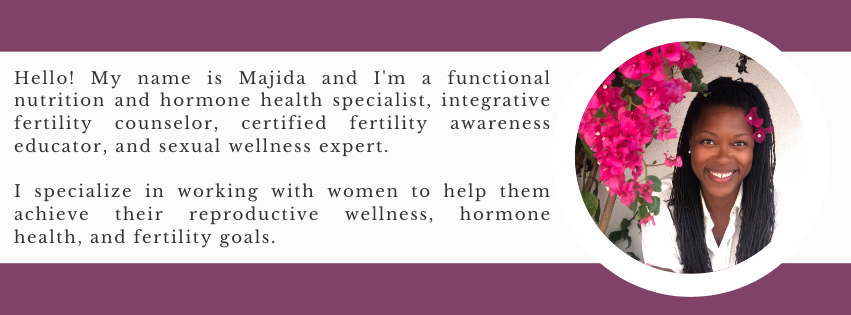
At Connection Care Therapy, I (Majida) take an integrative approach to fertility counseling that recognizes the deep connection between mind and body. This approach combines:
Mental Wellness: Traditional counseling techniques to process emotions, develop coping strategies, and support mental health throughout your fertility journey.
Functional Nutrition: Understanding how nutrition affects hormone health and fertility, and making dietary changes that support your body’s optimal functioning.
Fertility Awareness Education: Learning to read your body’s fertility signs through body literacy, which empowers you with knowledge about your cycle, hormone health, and fertile window.
Somatic Therapy: Reconnecting the mind and body to release stored stress, emotions, and trauma that may impact reproductive and hormonal health. Through body-based awareness and gentle movement or grounding techniques, somatic therapy supports nervous system regulation and emotional healing.
Hypnotherapy: Using guided relaxation and focused awareness to access the subconscious mind, helping to reframe limiting beliefs, reduce stress, and cultivate a positive mindset toward conception and reproductive wellness.
This holistic approach recognizes that fertility isn’t just about reproductive organs. It involves your whole self: physical health, emotional well-being, relationships, lifestyle, and more. By addressing all these dimensions, integrative fertility counseling supports not just your fertility goals, but your overall health and quality of life.
Tools for Informed Decision-Making
Beyond emotional support, fertility counseling helps you make informed decisions about your fertility journey. Your counselor can help you:
Evaluate different fertility treatment options
Understand the emotional implications of various paths (treatment, adoption, fostering, child-free living)
Weigh the risks, benefits, and trade-offs of different choices
Clarify your values and priorities
Communicate effectively with your partner about major decisions
Navigate decisions about sharing information with family and friends
This decision-making support helps you feel more empowered and confident in your choices, rather than feeling swept along by circumstances or external pressure.
Preparing for Fertility Counseling
Taking a few steps to prepare can help you get the most out of your counseling experience.
What to Bring
Medical Information: Consider bringing relevant health records, such as:
Your fertility awareness charts (basal body temperature, cervical fluid observations)
Fertility test results
Information about previous treatments you’ve tried
Your menstrual cycle history
Questions and Concerns: Write down questions or topics you want to discuss. In the moment, it’s easy to forget what you wanted to talk about.
Notebook: Bring something to take notes on insights, strategies, or homework your counselor suggests.
Preparing Emotionally
It’s completely normal to feel anxious or nervous before your first session. Here are some ways to prepare:
Acknowledge Your Feelings: Whether you’re feeling hopeful, skeptical, scared, or relieved about starting counseling, all your feelings are valid.
Journal: Writing about your thoughts and feelings before your appointment can help you clarify what you want to talk about and process some emotions beforehand.
Talk to Someone You Trust: If it feels helpful, discuss your decision to seek counseling with a supportive friend or family member.
Set Realistic Expectations: Counseling isn’t a magic fix, and your feelings won’t transform overnight. It’s a process that takes time and active participation.
Practice Self-Compassion: Seeking help is courageous. Be gentle with yourself as you take this step.
Remember, the goal of fertility counseling is to support you throughout your journey. By preparing yourself beforehand, you can feel more confident and empowered to make the most of your sessions.
Types of Fertility Counseling
Fertility counseling can be tailored to meet your specific needs and preferences. Understanding the different formats can help you choose what feels right for you.
Individual Counseling
Individual fertility counseling provides a private, intimate setting to explore your personal experience with fertility challenges.
What It Involves:
One-on-one sessions with a fertility counselor
Focus on your unique emotions, thoughts, and experiences
Exploration of how fertility challenges affect your sense of self, your relationships, and your life
Who It’s For:
Individuals who want a private space to process their feelings
Those dealing with personal issues that feel difficult to discuss with a partner or in a group
People whose partners aren’t interested in counseling or who are pursuing parenthood solo
Anyone who prefers individual attention and personalized guidance
Benefits:
Complete privacy and confidentiality
Ability to work at your own pace
Focused attention on your specific needs
Freedom to discuss anything without worrying about your partner’s feelings
Couples Counseling
Couples counseling incorporates elements designed to help partners navigate the often stressful experience of infertility together and address any strains in their relationship.
What It Involves:
Joint sessions with your partner and a fertility counselor
Focus on communication, shared decision-making, and maintaining connection
Exploration of how each partner experiences and copes with fertility challenges
Who It’s For:
Couples who want to navigate fertility challenges together
Partners experiencing communication difficulties or relationship strain
Couples making major decisions about fertility treatment
Those who want to strengthen their relationship during this challenging time
Benefits:
Improved communication and understanding between partners
Tools for navigating different coping styles
A safe space to discuss difficult topics
Strengthened partnership and intimacy
Shared coping strategies
Group Counseling
Group counseling brings together people who share similar fertility challenges, creating a community of support and understanding.
What It Involves:
Small group sessions (typically 6-12 people) led by a fertility counselor
Opportunities to share experiences, emotions, and coping strategies
Connection with others who truly understand your journey
Who It’s For:
Individuals or couples who feel isolated in their fertility journey
Those who want to connect with others facing similar challenges
People who benefit from hearing how others cope with similar situations
Anyone looking for a more affordable counseling option
Benefits:
Reduced feelings of isolation
Peer support and validation
Learning from others’ experiences and coping strategies
Building meaningful connections
Often more affordable than individual counseling
Finding a Fertility Counselor
Choosing the right fertility counselor is an important decision. You deserve someone who understands your experience and can provide the specialized support you need.
Key Factors to Consider
Credentials & Training: Look for counselors with:
Formal education in fertility counseling (such as a Master’s degree with a focus in fertility counseling, reproductive trauma, or reproductive health)
Specialized training or certifications in fertility-related areas
Additional relevant certifications (such as fertility awareness education, functional nutrition & hormone health specialist, or reproductive health knowledge)
Ongoing education in the fertility and reproductive health field
Experience:
How many years have they worked with fertility challenges?
What types of fertility issues do they have experience with (infertility, recurrent loss, fertility preservation, third-party reproduction)?
Do they work with individuals, couples, or both?
Approach & Philosophy:
What therapeutic approaches do they use?
Do they integrate other modalities (like nutrition, body literacy, mindfulness)?
Does their philosophy align with your values and goals?
Compatibility:
Do you feel comfortable and understood when talking with them?
Can you communicate openly?
Do they respect your autonomy and support your decision-making?
Practical Considerations:
Are they available when you need appointments?
Do they offer in-person, virtual, or both types of sessions?
Does their fee structure work for your budget?
Do you need them to accept your insurance?
How to Find a Fertility Counselor
Ask for Referrals:
Your OB-GYN, reproductive endocrinologist, or fertility clinic may have recommendations
Friends or family members who’ve been through fertility challenges might have suggestions
Online fertility communities can be good sources of recommendations
Search Online:
Psychology Today directory (filter for “infertility” specialty)
American Society for Reproductive Medicine (ASRM) Mental Health Professional Group
Local or national fertility organizations
General therapist directories with fertility specialty filters
Verify Credentials:
Review their education and training background
Check their certifications and specialized training
Read their professional bio or website carefully
Schedule a Consultation: Most fertility counselors offer brief introductory calls or consultations. Use this opportunity to:
As a fertility counselor with a Master’s in Mental Health Counseling with a focus in Fertility Counseling, Reproductive Trauma, and Integrative Approaches to Reproductive Health, I (Majida) bring comprehensive, specialized training to support your fertility journey. I’m also a certified fertility awareness educator (with around 20 years of charting and teaching experience) and certified functional nutrition and hormone health specialist, allowing me to offer truly integrative care.
A holistic understanding of how mind and body work together to impact fertility
Somatic therapy and hypnotherapy specific to your cycle and fertility journey
This approach recognizes that fertility challenges affect your whole self, not just your reproductive system. Whether you’re just starting to think about conception, actively trying, undergoing treatment, or processing loss, I’m here to support you with compassion, expertise, and personalized care.
At Connection Care Therapy, you’ll find:
A safe, non-judgmental space to process your emotions
Practical tools for managing stress and anxiety
Guidance on optimizing your hormone health through nutrition and lifestyle
Education about your fertility signs and cycle
Support for making informed decisions aligned with your values
A partner in your journey toward parenthood (however that looks for you)
Ready to explore how fertility counseling can support you?
Contact Connection Care Therapy to schedule a consultation and begin your path toward greater understanding, agency, and well-being.
Key Points & Conclusion
Let’s recap what we’ve covered about fertility counseling:
Fertility counseling is specialized support designed to help individuals and couples facing fertility challenges, provided by professionals with formal training in this field
It provides emotional support, coping strategies, and tools for making informed decisions about fertility treatments
Fertility counselors may include licensed mental health professionals as well as trained educators and coaches with advanced degrees and certifications in fertility counseling
Consider counseling if you’re feeling depressed, anxious, or preoccupied with infertility to the point it’s affecting your daily life
Evidence-based approaches, including cognitive-behavioral techniques and mindfulness, are effective for managing infertility-related stress, anxiety, and depression
Fertility counseling is available in individual, couples, and group formats
Integrative fertility counseling combines emotional support with functional nutrition and fertility awareness education for holistic care
When selecting a counselor, consider their education, training, experience, approach, and whether you feel comfortable with them
Preparing emotionally and bringing relevant information can help you make the most of counseling
I (Majida at Connection Care Therapy) offer specialized, integrative fertility counseling with a Master’s degree in Mental Health Counseling focused on Fertility Counseling, Reproductive Trauma, and Integrative Approaches to Reproductive Health, plus certifications in fertility awareness and functional nutrition
Conclusion
Your fertility journey is deeply personal, and you don’t have to navigate it alone. Fertility counseling offers a compassionate, specialized form of support that addresses the emotional, psychological, and relational aspects of trying to conceive.
Whether you’re experiencing infertility, processing pregnancy loss, making difficult decisions about treatment options, or simply feeling overwhelmed by the uncertainty of your path to parenthood, counseling can help. It provides tools to manage stress, process complex emotions, strengthen relationships, and make decisions that align with your values and goals.
Remember that seeking support isn’t a sign of weakness, it’s an act of self-care and strength. Taking care of your mental and emotional health is just as important as addressing your physical health, and doing so can improve your overall well-being and quality of life throughout your fertility journey.
You deserve support. You deserve to feel heard, understood, and empowered. You deserve to have someone in your corner who understands the unique challenges of fertility struggles and can guide you toward greater peace and clarity.
If you’re considering fertility counseling, know that you’re not alone, and taking this step is courageous. At Connection Care Therapy, I (Majida) am here to support you with expertise, compassion, and a holistic approach that honors your whole self: mind, body, and spirit.
Ready to take the next step?
Reach out to Connection Care Therapy today to schedule a consultation. Together, we can navigate this journey and help you find your path forward, whatever that looks like for you.
Bigelow, J. L., Dunson, D. B., Stanford, J. B., Ecochard, R., Gnoth, C., & Colombo, B. (2004). Mucus observations in the fertile window: A better predictor of conception than timing of intercourse. Human Reproduction, 19(4), 889–892. https://doi.org/10.1093/humrep/deh173
Duane, M., Stanford, J. B., Porucznik, C. A., & Vigil, P. (2022). Fertility awareness-based methods for women’s health and family planning. Frontiers in Medicine, 9, Article 858977. https://doi.org/10.3389/fmed.2022.858977
Écochard, R., Duterque, O., Leiva, R., Bouchard, T., & Vigil, P. (2015). Self-identification of the clinical fertile window and the ovulation period. Fertility and Sterility, 103(5), 1319–1325.e3. https://doi.org/10.1016/j.fertnstert.2015.01.031
Najmabadi, S., Schliep, K. C., Simonsen, S. E., Porucznik, C. A., Egger, M. J., & Stanford, J. B. (2021). Cervical mucus patterns and the fertile window in women without known subfertility: A pooled analysis of three cohorts. Human Reproduction, 36(7), 1784–1795. https://doi.org/10.1093/humrep/deab049 Scarpa, B., Dunson, D. B., & Colombo, B. (2006). Cervical mucus secretions on the day of intercourse: An accurate marker of highly fertile days. European Journal of Obstetrics, Gynecology, and Reproductive Biology, 125(1), 72–78. https://doi.org/10.1016/j.ejogrb.2005.07.024
Smoley, B. A., & Robinson, C. M. (2012). Natural family planning. American Family Physician, 86(10), 924–928. https://pubmed.ncbi.nlm.nih.gov/23157145/ Thijssen, A., Meier, A., Panis, K., & Ombelet, W. (2014). ‘Fertility awareness-based methods’ and subfertility: A systematic review. Facts, Views & Vision in ObGyn, 6(3), 113–123. https://www.ncbi.nlm.nih.gov/pmc/articles/PMC4216977/
Weschler, T. (2015). Taking charge of your fertility: The definitive guide to natural birth control, pregnancy achievement, and reproductive health (20th anniversary ed.). William Morrow/HarperCollins.
Disclaimer:
The information provided on this blog is for educational and informational purposes only and is not intended as a substitute for professional medical advice, diagnosis, or treatment. Always seek the advice of your physician or other qualified health provider with any questions you may have regarding a medical condition. The content on this blog is not meant to replace professional medical advice or to be used to prevent, diagnose, or treat any disease or illness. Reliance on any information provided by this blog is solely at your own risk.
Sign up today and receive your FREEResourceBundle to support your journey towards hormone health, fertility, gut wellness, cycle wisdom, and holistic nutrition!